




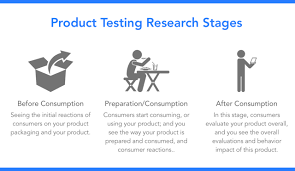
It feels like you’ve poured your heart and soul into a new product. You’re excited. You’re ready to share it. But then a nagging question pops up: “How long does this actually need to be tested?” It’s a big one. It can feel like a guessing game. Getting it wrong means potential problems later. Getting it right means happy customers and a strong launch.
Figuring out the right testing time is key. It protects you and the people who will use your creation. This guide will break down the process. We’ll look at what’s involved. We’ll help you understand the different stages. You’ll learn how to estimate the right amount of time for your specific product.
This guide helps you understand the necessary testing timelines for bringing a new product to market. It covers crucial stages from initial concept to final release, ensuring quality, safety, and user satisfaction without unnecessary delays.
Understanding Product Testing Phases
Testing a product isn’t just one step. It’s a journey. Each phase has its own goal. And each phase takes a certain amount of time. Think of it like building a house. You wouldn’t just throw up the walls. You check the foundation first. Then the framing. Then the plumbing and electrical. Product testing is much the same. It moves from general checks to very specific ones.
The main goal is to catch issues early. This saves money and time down the road. It also makes sure your product is safe and works well. We’ll explore the key testing phases. This will give you a clearer picture of the whole process.
My Own Product Testing Story
I remember my first big product launch. It was a small kitchen gadget. I thought I’d tested it enough. I’d used it myself a hundred times. My friends had tried it too. I thought we were golden. We rushed it to market. Within a week, I got an email. Someone’s gadget had a small part break off. It wasn’t dangerous, but it was annoying. They wanted a refund. Then another email. And another. My heart sank. My “enough” testing wasn’t actually enough. I learned a hard lesson that day about thoroughness.
That experience taught me that personal use isn’t the same as real-world, varied use. Even with friends, people often try to be nice. They might not push the product to its limits like a stranger would. It made me realize the importance of structured testing. I learned that different types of users and scenarios are vital.
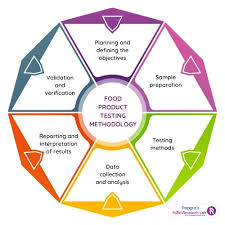
Core Testing Stages Overview
Concept Testing: Is the idea good?
Prototype Testing: Does the basic version work?
Usability Testing: Is it easy to use?
Performance Testing: Does it do its job well?
Durability Testing: Will it last?
Safety Testing: Is it safe for users?
Market Testing: Will people buy it?
Concept and Idea Validation
Before you build anything, you need to know if the idea itself has legs. This is concept testing. You’re not testing a physical product yet. You’re testing the idea of the product. Does it solve a real problem? Is there a need for it?
This stage is about asking questions. You might talk to potential customers. You could run surveys. You might even create a simple landing page to see if people sign up for more info. The goal is to get feedback on the core concept. This avoids building something nobody wants.
How long does this take? It can be quick. A few days of talking to people. Or maybe a week of running online ads. It depends on how fast you can gather opinions. It’s often the shortest testing phase. But it’s one of the most important. Skipping this can lead to wasted effort later.
Idea Validation Tips
- Talk to your target audience. Ask them about their problems.
- Use surveys. Keep them short and to the point.
- Create mockups. Show what you envision.
- Look at competitors. What are they doing well?
- Be open to feedback. It might change your idea.
Prototyping and Early Testing
Once the idea is solid, you make a prototype. This is a basic working model. It might not look pretty. It might be made of different materials. But it should do the main job you designed it for. This is where you start testing the actual function.
Prototype testing focuses on core functionality. Does it turn on? Does it perform its main task? You’re looking for major flaws. This is the time to find out if your basic design is sound. You’ll iterate here a lot. You build, you test, you tweak, you build again.
How long for this phase? It varies greatly. A simple prototype might take a few days to build and test. A complex one could take weeks or months. This includes design, building, and testing cycles. For many physical products, this stage can take 1 to 4 weeks per iteration. Software prototypes might be faster.
Usability Testing: Making it Easy
A product can work perfectly. It can be safe and durable. But if people can’t figure out how to use it, it will fail. Usability testing is all about that. It’s about seeing if your product is intuitive. Can users achieve their goals with it?
In usability tests, you watch real people use your product. You give them tasks to complete. You don’t help them. You just observe. You look for confusion. You see where they get stuck. You note down any frustrations. This feedback is gold for refining the user experience.
This phase typically takes 1 to 3 weeks. You might run a few rounds of testing. Each round involves recruiting participants, running the tests, and analyzing the results. A round might last 3-7 days for testing, plus time for setup and analysis.
Usability Testing Steps
- Define Goals: What do you want to learn?
- Recruit Users: Find people like your target customers.
- Prepare Tasks: Create realistic scenarios for them.
- Conduct Tests: Watch and take notes. Ask follow-up questions.
- Analyze Data: Find patterns and common issues.
- Implement Changes: Fix what you learned.
Performance and Durability Testing
This is where you push the product. How well does it perform under stress? Does it meet its claimed capabilities? Performance testing checks speed, efficiency, and accuracy. For a blender, it might be how quickly it can blend tough ingredients. For software, it’s about how fast it loads.
Durability testing is about how long it lasts. Will it break after a few uses? Or can it withstand repeated stress over time? This involves stress testing, cycle testing, and environmental testing. Think about extreme temperatures, drops, or continuous operation.
The timeline here can be longer. Performance tests might be done within a week or two. But durability tests can take weeks or even months. You might need to run a product for thousands of cycles. Or expose it to harsh conditions for a set period. This stage is crucial for product reliability. It can add 2 to 8 weeks to your timeline.
Durability Testing Examples
Drop Tests: How many times can it be dropped from a certain height?
Cycle Tests: How many on/off cycles can it handle?
Load Tests: Can it handle the maximum weight or pressure?
Environmental Tests: Does it work in heat, cold, or humidity?
Safety Testing: A Non-Negotiable Step
This is perhaps the most critical phase. Safety testing ensures your product won’t harm users or the environment. This is especially true for products involving electricity, heat, sharp edges, or chemicals. You absolutely must prioritize this.
Safety testing often involves third-party labs. These labs have specialized equipment and expertise. They follow strict standards set by organizations like UL, CE, or FCC. For children’s products, standards like those from the Consumer Product Safety Commission (CPSC) are vital. This ensures your product meets legal and ethical requirements.
The time for safety testing depends on the product’s complexity and the certifications required. It can range from 2 weeks to 2 months or even longer. This includes the time it takes for the lab to perform tests and provide a report. It’s often a bottleneck, so planning is key.
Common Safety Standards
UL (Underwriters Laboratories): For electrical product safety.
CE: For products sold in the European Economic Area.
FCC (Federal Communications Commission): For electronic devices that emit radio frequency.
CPSC (Consumer Product Safety Commission): For general consumer product safety in the U.S.
Market Testing and Beta Programs
Before a full public launch, you might want to test the waters. Market testing involves offering your product to a limited group or in a limited area. This is to gauge market reception. Will people buy it? What price point works best?
Beta testing is a form of market testing. You release a near-final version of your product to a group of testers. These are real users who provide feedback on performance, usability, and any bugs missed in earlier stages. This is your last chance to catch major issues before everyone sees it.
The duration for this phase can vary. A beta program might run for 2 to 6 weeks. This gives testers enough time to use the product and provide thoughtful feedback. Market testing in specific regions could last longer, depending on sales cycles and data collection needs.
Beta Program Tips
- Clearly define the beta group.
- Set expectations for testers. What feedback do you need?
- Provide a clear way to report issues.
- Thank your beta testers.
- Act on the feedback received.
Factors Influencing Test Duration
So, how long is enough? The answer isn’t one size fits all. Several factors make the timeline stretch or shrink.
Product Complexity: A simple app will test much faster than a new car engine. The more intricate the design and functions, the more testing is needed. Each component needs checking. Each interaction must be smooth.
Industry and Regulations: Some industries have strict rules. Medical devices or food products need rigorous safety and efficacy testing. These are often mandated by government bodies. This adds significant time and cost.
Target Audience: Are you designing for a general audience or a niche group? Testing with a diverse range of users is essential. If your product needs to work for older adults, for instance, you need to include them in your tests.
Risk Level: Products with high risk if they fail will require more testing. Think about safety-critical items like car brakes or medical equipment. Low-risk items, like a novelty t-shirt, need less intense scrutiny.
Development Stage: Testing happens throughout development. Early tests are shorter and focused. Later tests are more comprehensive. If you find major issues late, you might have to go back. This adds time.
Quick Check Factors
Complexity: Simple = Faster. Complex = Slower.
Regulations: High = Longer. Low = Shorter.
User Group: Broad = More testing. Niche = Potentially less.
Risk: High risk = More time. Low risk = Less time.
Development Stage: Early = Quick checks. Late = Deep dives.
Typical Timelines for Different Product Types
To give you a rough idea, here are some typical timelines. Remember, these are averages and can change.
Software/App Development:
- Unit Testing: Ongoing, integrated into coding.
- Integration Testing: 1-3 weeks.
- System Testing: 2-4 weeks.
- User Acceptance Testing (UAT)/Beta: 2-6 weeks.
- Total for significant testing: 4-12 weeks before launch, but continuous.
Consumer Electronics (e.g., headphones, smart plugs):
- Prototype Testing: 2-4 weeks (multiple iterations).
- Usability Testing: 1-3 weeks.
- Performance/Durability: 3-8 weeks.
- Safety/Certification: 4-12 weeks.
- Beta Testing: 2-6 weeks.
- Total for dedicated testing phases: 12-33 weeks (approx. 3-8 months).
Physical Goods (e.g., furniture, kitchenware):
- Prototype Testing: 2-5 weeks.
- Usability/Ergonomics: 1-3 weeks.
- Durability/Load Testing: 4-10 weeks.
- Safety Testing: 3-8 weeks (if applicable).
- Market Testing: 2-4 weeks.
- Total for dedicated testing phases: 12-30 weeks (approx. 3-7 months).
Food and Beverage Products:
- Sensory Evaluation/Taste Tests: 1-3 weeks.
- Shelf-life Testing: 4-12 weeks (can be longer).
- Safety/Microbiological Testing: 2-6 weeks.
- Regulatory Compliance: 2-8 weeks.
- Total for dedicated testing phases: 9-29 weeks (approx. 2-7 months).
These numbers reflect the core testing after the product is designed and a working model exists. They don’t include the initial idea validation or design iteration time.
When Is It “Enough” Testing?
This is the million-dollar question. There’s no magic number. “Enough” means you’ve done your due diligence. You’ve addressed the key risks. You’ve validated the product with its intended users. You’ve met safety and regulatory requirements.
It’s a balance. You can’t test forever. At some point, you need to launch. But launching too soon can be disastrous. Look for these signs:
Signs You Might Be Ready to Launch
- No critical bugs remain.
- Safety standards are met and certified.
- Key user tasks can be completed easily.
- Users generally have positive feedback.
- Durability and performance meet expectations.
- You’ve addressed the majority of feedback from beta testing.
It’s also about knowing the remaining risks. For instance, if you discover a minor cosmetic flaw very late, you might decide to accept it for the first batch and fix it in the next. This is a calculated decision, not an oversight.
The Cost of Rushing vs. Over-Testing
There’s a financial and strategic aspect to testing time. Rushing testing can lead to expensive recalls. It can damage your brand reputation. Fixing problems after launch is always more costly than fixing them during development. Imagine a widespread issue with your product. You’ll have to deal with returns, angry customers, and potentially costly repairs or replacements.
On the other hand, over-testing can be inefficient. It can delay your market entry. Competitors might get there first. It also adds to development costs. You need to find the sweet spot. This means thorough, but also timely, testing.
My own experience with the broken kitchen gadget taught me this lesson firsthand. The cost of those refunds and the dent in my reputation far outweighed the cost of a few more weeks of rigorous testing. It’s about investing wisely in quality.
Real-World Scenario: A New Smartwatch
Let’s imagine creating a new smartwatch. The company has an idea for a unique health-tracking feature. They’ve designed the hardware and software.
First, they’d have concept testing. They’d show mockups and explain the feature to fitness enthusiasts and tech reviewers. This might take 2-3 weeks to gather feedback.
Next, they’d build a few functional prototypes. These would go through internal testing for basic functions like time display, button responsiveness, and initial sensor readings. This could take 4-6 weeks, with several design tweaks.
Then, usability testing would begin. Different age groups and tech-savviness levels would try to set up the watch, navigate menus, and use the new health feature. This phase, including recruiting and analysis, might take 3-4 weeks.
Performance and durability testing would follow. They’d test battery life under various usage conditions, check the accuracy of the heart rate monitor against medical-grade devices, and subject the watch to water submersion tests and drop tests. This could be intensive, requiring 6-10 weeks.
Safety testing would be crucial, especially for electronic components and battery. This would involve accredited labs to ensure compliance with FCC and other safety standards. This process can take 4-8 weeks.
Finally, a beta program would launch. A group of 100-200 users would get the watch for a month to use in their daily lives. They’d report bugs, usability issues, and feedback on the health feature’s real-world performance. This phase would last 4-5 weeks, plus time to compile feedback and make final adjustments.
Adding all this up, a thorough testing process for a smartwatch could easily span 23 to 36 weeks, or about 6 to 9 months. This is typical for complex consumer electronics.
Smartwatch Testing Breakdown
Concept Validation: 2-3 Weeks
Prototyping & Internal Checks: 4-6 Weeks
Usability Testing: 3-4 Weeks
Performance & Durability: 6-10 Weeks
Safety & Certification: 4-8 Weeks
Beta Program: 4-5 Weeks
Total Estimated: 23-36 Weeks (6-9 Months)
What This Means for Your Product
Understanding these phases and timelines is essential. It helps you set realistic expectations. It allows for better planning and resource allocation. Don’t just guess how long testing should take. Map out the stages relevant to your product. Consider the complexity and risks involved.
It’s better to build testing into your project schedule from the start. Factor in time for potential delays. Be prepared to iterate based on feedback. A well-tested product is a confident launch.
Quick Tips for Efficient Testing
While thoroughness is key, efficiency matters too. Here are some ways to make your testing process smoother:
- Start testing early. Don’t wait until the product is “finished.”
- Test the most critical features first. Address core functionality and safety early.
- Use automated testing where possible. Especially for software, this can save time.
- Plan your tests in advance. Know what you want to achieve in each session.
- Get feedback from diverse users. This catches more issues.
- Document everything. Keep clear records of test results and issues found.
- Prioritize feedback. Focus on fixing the most important problems.
Frequently Asked Questions
How long does it take to test a new app?
Testing a new app usually involves several stages: unit testing, integration testing, system testing, and user acceptance testing (UAT) or beta testing. While unit testing is ongoing during development, dedicated testing phases can take anywhere from 4 to 12 weeks before a significant launch. Continuous testing and updates are common for apps.
What is the shortest time to test a product?
The shortest time to test a very simple product with low risk might be 2-4 weeks. This would involve basic functional checks, usability for a few users, and a quick safety glance if applicable. However, most products require significantly more time for thorough validation.
Should I test my product for longer than the timeline suggests?
If you discover significant issues or receive concerning feedback during your planned testing period, it’s wise to extend the testing. Prioritizing product quality and safety over a strict deadline is usually the best approach, especially for complex or high-risk items.
What if I can’t afford extensive testing?
If budget is a constraint, focus on the most critical testing phases: core functionality, essential usability, and mandatory safety compliance. Prioritize getting feedback from a small, diverse group of your target users. Sometimes, a phased launch is an option where you test with a smaller group first.
How long should I test a physical product prototype?
Testing a physical product prototype can take 2 to 5 weeks, often involving multiple iterations. This includes checking its basic function, usability, and early signs of durability. Complex prototypes may require longer periods for design and build-test cycles.
Is safety testing always necessary?
Yes, safety testing is always necessary, especially for products that could pose a risk to users, property, or the environment. Regulatory requirements often mandate specific safety tests. Even for seemingly simple products, unforeseen safety issues can arise if not properly evaluated.
What’s the difference between performance and durability testing?
Performance testing checks how well a product functions under normal and peak conditions, like speed or accuracy. Durability testing assesses how long a product lasts and its resistance to wear and tear over time, often through repeated use or stress.
Conclusion
Determining how long to test a product is a critical strategic decision. It’s a balance between thoroughness, market speed, and cost. By understanding the different testing phases—from concept validation to safety checks and market readiness—you can create a comprehensive plan. Investing adequate time in testing safeguards your reputation and ensures you deliver a quality, safe product that customers will love.