
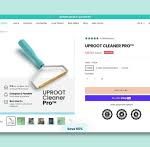




The “product of the day” dropshipping approach focuses on finding one trending item each day and marketing it heavily to potential buyers. It relies on quick sales of a single, often impulse-buy, product before moving to the next popular item the following day.
What is “Product of the Day” Dropshipping?
Let’s break down what “product of the day” dropshipping really means. Think of it like a flash sale, but for your online store. Instead of having a store with many different items, you pick just one thing.
This one item is supposed to be super popular right now. You then try to sell as many of that single item as you can, ideally within a day or two. After that, you move on to finding a brand new “product of the day.”
The whole idea is to catch a trend. Trends move fast. They are like waves.
You want to jump on the wave when it’s big. Then, you ride it to shore. Once the wave is gone, you look for another one.
This method aims to make quick sales. It doesn’t focus on building a big, long-term brand with many products. It’s more about speed and capitalizing on what’s hot at that exact moment.
Suppliers for this model are usually dropshipping companies. They hold the stock. They ship the items directly to your customers.
You don’t touch any products. You just handle the marketing and sales. You find a cool product.
You list it on your online shop. You run ads to tell people about it. When someone buys it, you tell your supplier.
The supplier sends it out. You keep the difference between what you charged and what the supplier charged.
This is different from a regular online store. A normal store might have a whole category of shoes. Or a set of kitchen gadgets.
A “product of the day” store picks just one type of gadget today. Maybe a special phone holder. Tomorrow, it could be a unique kitchen slicer.
The goal is to get people excited about a single item each time they visit. It’s all about the “now.”
The core idea is simple: find a hot product, sell it fast, move on. It sounds easy, right? But there’s a lot more to it than just picking something shiny.
We’ll dig into the real challenges and what makes it tick.
My First Dive into the Trend Cycle
I remember the first time I really got caught up in the hype of trending products. It was a few years ago. I was scrolling through social media, as many of us do.
I saw this amazing little gadget. It promised to do something super useful. Everyone in the comments was like, “Wow, I need this!” I saw a few ads for it too.
It looked like it was everywhere.
My brain immediately went into “business mode.” This must be selling like crazy, I thought. I found a dropshipping supplier for it. It wasn’t very expensive for them to get.
I set up a simple online store. I wrote some snappy descriptions. Then, I put a bit of money into running a few ads on social media.
I thought I was going to be rich overnight. I pictured orders flooding in.
The first few hours were quiet. Then, a couple of orders came in! I felt a rush of excitement.
This was it! This was the magic. I told my supplier.
They confirmed they’d ship it. But then. the orders slowed down.
They stopped. The ads weren’t bringing in many clicks anymore. The buzz seemed to fade just as quickly as it appeared.
I checked social media again. The same gadget wasn’t the main thing people were talking about. Something new had taken its place.
That first experience was a bit of a shock. I learned that trends are fragile. They can disappear.
My “product of the day” experiment lasted maybe three days before the interest fizzled. I made a little money, but not enough to make it feel like a real business. It felt more like a fleeting game of chance.
It showed me that just finding a trending product isn’t enough. You need a strategy that can handle the ups and downs.
Product Spotlight: The “Impulse Buy” Factor
What makes a product a “product of the day”?
- Novelty: It’s something new or different.
- Problem-Solving: It fixes a common annoyance.
- Visual Appeal: It looks great in photos or videos.
- “Wow” Factor: It makes people say “I didn’t know that existed!”
- Low Price Point: Often under $30, encouraging quick buys.
These kinds of products thrive on impulse. People see them. They want them right away.
They don’t spend days thinking about it. This is key to the “product of the day” model.
Why This Approach Appeals to New Sellers
It’s easy to see why new entrepreneurs are drawn to the “product of the day” dropshipping idea. It seems like a shortcut. You don’t need to build a big store.
You don’t need to stock a lot of items. You don’t need a huge marketing budget for many products.
The promise is simple: find one hot item, sell it, make money. This sounds much less scary than starting a full-blown online shop. It feels manageable.
You can focus all your energy on that one item. This focused approach can seem very appealing when you’re just starting out and feeling overwhelmed.
Many people are looking for a way to make extra money online. They might have a day job. They want something flexible.
The “product of the day” model offers that flexibility. You can search for products in the evening. You can run ads when you have free time.
It doesn’t require a massive time commitment upfront compared to building a brand.
Think about the mental load. With a regular store, you have to worry about product sourcing for multiple items. You deal with customer questions for different types of products.
You manage inventory levels (even if a dropshipper holds it, you still need to know what’s available). The “product of the day” model simplifies this. You only need to understand one product at a time.
It taps into the dream of “passive income.” While no online business is truly passive, this model offers the illusion of less ongoing effort per product. Once the ads are running and the product is live, the hope is for sales to come in with minimal daily intervention.
This approach also feels very modern. It’s linked to social media trends and viral marketing. These are concepts many people understand and engage with daily.
It feels current and relevant. It’s not some old-fashioned way of selling.
However, this appeal can also be its downfall. What seems like a simple solution often hides complex challenges. Let’s explore those next.
Quick Scan: Why It’s Tempting
- Low Startup Costs: You don’t need to buy stock.
- Minimal Inventory: No need to worry about storage.
- Focused Effort: One product at a time.
- Trend-Driven: Capitalizes on current popular items.
- Fast Setup: Can launch a store quickly.
These points make it sound like a perfect plan for beginners. But ease of entry often means a crowded market.
The Realities and Challenges of “Product of the Day” Dropshipping
While the idea of “product of the day” dropshipping sounds exciting, the reality can be much tougher. It’s not as simple as picking a product and watching money roll in. There are many hurdles to overcome.
One of the biggest challenges is finding truly winning products. Yes, you can spot trends. But trends change incredibly fast.
What’s hot today might be old news tomorrow. You spend a lot of time searching. You look through social media, trend-tracking sites, and competitor stores.
It’s a constant hunt. And even when you find something that seems popular, it might already be oversaturated.
This leads to another major problem: competition. Because the model is so appealing to beginners, many people are doing it. You’ll likely find yourself competing with dozens, maybe hundreds, of other dropshippers selling the exact same item.
This drives up advertising costs. It makes it harder to stand out and get noticed by customers.
Advertising is crucial here. The “product of the day” model heavily relies on paid ads, usually on platforms like Facebook, Instagram, or TikTok. These ads need to be very persuasive.
They need to convince someone to buy an unknown product from an unknown store, often on impulse. Getting those ads right takes skill and money. It’s easy to spend a lot on ads and not get many sales in return.
When your product changes daily, you’re constantly testing new ad campaigns, which is expensive and time-consuming.
Customer trust is also a big issue. Since you’re selling one item at a time and switching often, you don’t build a loyal customer base. People might buy from you once because the product was cool.
But they won’t necessarily come back. They might also be wary of buying from a store that seems to only push the latest fad. They want to know if the store is reliable.
This lack of trust can hurt sales.
Shipping times can be another pain point. With dropshipping, products are sent from suppliers, often overseas. This means shipping can take weeks.
For an impulse buy, customers expect to get their item relatively quickly. Long shipping times can lead to complaints, refunds, and negative reviews. This is especially true if the product is perishable or needed urgently.
The “product of the day” often doesn’t have this urgency, but people still want their items.
Product quality is also a gamble. You’re relying on your supplier to provide good quality items. If you don’t thoroughly vet your suppliers, you could end up selling products that break easily or don’t work as advertised.
This damages your reputation. It can lead to chargebacks from credit card companies.
Finally, the profit margins can be thin. Because you’re often competing on price and paying for ads, you might only make a small profit on each sale. You need a very high volume of sales to make significant money.
This volume is hard to achieve consistently when your “product of the day” might only be popular for a short time.
Contrast: “Product of the Day” vs. Niche Store
Product of the Day:
- Focus: Single trending item.
- Goal: Quick, high-volume sales.
- Brand: Weak or non-existent.
- Marketing: Aggressive, short-term ads.
- Risk: High, trend dependent.
Niche Store:
- Focus: Specific product category (e.g., pet supplies).
- Goal: Long-term customer loyalty and repeat buys.
- Brand: Strong and established.
- Marketing: Diverse, builds community.
- Risk: Moderate, market dependent.
This contrast shows how different the underlying business strategies are. One is about speed; the other is about building something lasting.
Finding “Winning” Products: The Detective Work
So, how do people actually find these “products of the day”? It’s not magic. It involves a lot of research and detective work.
Think of yourself as a trend spotter. You need to be observant and always looking for clues.
One common place to start is social media. Platforms like TikTok, Instagram, and even Pinterest are goldmines for trends. You’ll see what’s going viral.
You’ll see what people are talking about. You’ll notice products that are featured in popular videos or posts. Look for content with a lot of engagement – likes, comments, shares.
This tells you people are interested.
You also need to look beyond just what’s popular right now. Ask yourself: Why is this product popular? Does it solve a problem?
Is it unique? Is it something people didn’t know they needed until they saw it? The best “products of the day” have a story.
They have a clear benefit that’s easy to understand.
Tools can help. There are websites and software designed to track trending products. Some show you what’s selling well on large marketplaces like Amazon or AliExpress.
Others analyze social media trends. You can also look at competitor stores. See what they are advertising.
What products are featured prominently on their sites? But remember, by the time you see it on a competitor’s site, it might be too late.
Consider the impulse buy factor. Products that are visually appealing and relatively inexpensive are often good candidates. If someone sees a cool gadget for $20, they are more likely to click “buy” without much thought than if they see something for $200.
Think about the “fear of missing out” (FOMO). If a product is marketed as a limited-time offer or is trending heavily, people will want to get it before it’s gone.
You also need to consider the logistics. Can you find a reliable dropshipping supplier for this product? Is the supplier reputable?
Do they have good reviews? What are their shipping times? If a product is hard to source or ships very slowly, it’s not a good candidate, no matter how popular it seems.
It’s a process of elimination. You might look at 100 products before finding one that seems promising. Then you need to investigate it further.
Check search volumes. See if there’s already too much competition. It’s a lot of trial and error.
My own experience showed me that just because something is trending doesn’t mean it’s easy to sell profitably.
A key part of finding products is understanding your audience. Who are you trying to reach? What are their interests and problems?
A product that appeals to cat lovers might not appeal to hikers. Tailoring your product choice to a specific group can sometimes be more effective than trying to find something that appeals to everyone.
Quick Research Checklist for a New Product
- Social Media Buzz: High engagement on platforms?
- Problem/Solution: Does it fix a common issue?
- Unique Factor: Is it novel or different?
- Price Point: Is it impulse-buy friendly (under $30)?
- Supplier Availability: Can you find a reliable dropshipper?
- Shipping Times: Are they reasonable for online buyers?
- Competition Level: Is the market too crowded?
This checklist helps you stay organized and objective when looking for products.
Marketing a “Product of the Day” Effectively
Once you’ve found your “product of the day,” the next big hurdle is marketing it. This is where most people struggle. You need to get people excited and convince them to buy.
And you need to do it quickly.
Paid advertising is almost always the backbone of this strategy. Platforms like Facebook, Instagram, and TikTok are popular choices. You need to create compelling ad campaigns.
This means using eye-catching visuals, like short videos or attractive photos. The ad copy needs to be persuasive and highlight the product’s main benefit or its “wow” factor.
Video is often king for trending products. A short, engaging video that shows the product in action can be very effective. Think about how these products go viral on social media – it’s usually through a demonstration or a relatable scenario.
Your ads should mimic this style.
Urgency is a powerful marketing tool for this model. Use phrases like “Limited Time Offer,” “While Supplies Last,” or “Trending Now – Don’t Miss Out!” This encourages people to buy immediately. You want to create a sense of FOMO.
Your online store needs to be optimized for conversion. This means it should load quickly. It should be easy to navigate.
The product page must be clear, with good images, a strong description, and a simple checkout process. If your store is clunky or slow, potential buyers will leave before they even consider buying.
You also need to manage customer expectations about shipping. Be upfront about delivery times. Many dropshipping suppliers have longer shipping periods.
Clearly state this on your product page and at checkout. This helps prevent frustration and negative feedback later on.
Think about building a small audience. Even though you’re switching products, you can still try to get people to follow your social media pages. Share interesting content related to the types of products you feature.
This can build a small base of people who are interested in what you offer, even if the specific product changes.
Affiliate marketing can also be an option. If you find influencers who are interested in your product, you can offer them a commission for sales they drive. This can be a cost-effective way to reach new audiences.
However, it’s crucial to be ethical. Don’t make exaggerated claims about your product. Be honest about what it can and cannot do.
Building a reputation for honesty, even with short-lived products, will serve you better in the long run.
Marketing Tactics for “Product of the Day”
- Video Ads: Show the product in action.
- Compelling Copy: Highlight benefits and urgency.
- Influencer Outreach: Partner with relevant creators.
- Social Proof: Feature reviews or testimonials if available.
- Clear Shipping Info: Manage expectations upfront.
- Limited-Time Offers: Create a sense of scarcity.
These tactics are designed to create immediate interest and drive sales.
When Is It Not a “Product of the Day”?
It’s important to distinguish the “product of the day” model from other dropshipping strategies. Not every trending item or impulse buy fits this specific approach. Understanding the difference helps set realistic expectations.
If your goal is to build a brand, the “product of the day” model is likely not for you. Branding takes time. It involves creating a consistent identity, a loyal customer base, and a reputation for quality.
Constantly switching products makes it very hard to build a recognizable brand. Customers won’t know what to expect from your store long-term.
Similarly, if you want to offer a curated selection of related products, this isn’t the way to go. A store selling specialized coffee beans or unique dog toys focuses on a niche. They build expertise in that area.
They offer a range of complementary items. The “product of the day” model throws that focus out the window.
Products that require significant customer support or technical knowledge are also bad fits. If a product is complex, prone to breaking, or needs a lot of explanation, you’ll spend all your time answering questions and dealing with returns. This defeats the purpose of a simple, quick-selling item.
The “product of the day” should be easy to understand and use.
Items that have strict regulations or safety concerns are also off-limits for beginners. Think about things like supplements, certain electronics, or children’s toys. You need to be absolutely sure they meet all legal standards, which can be complicated and costly.
The U.S. Consumer Product Safety Commission (CPSC) has strict rules for many products.
Finally, if you’re looking for sustainable, long-term income without constant hustle, this model might not be ideal. It can feel like a never-ending cycle of finding new products, running ads, and dealing with short-lived sales. It requires continuous effort to stay on top of trends and marketing campaigns.
When to Avoid the “Product of the Day”
- Building a Brand: Requires consistent product lines.
- Niche Expertise: Needs focus on a specific category.
- Complex Products: High support needs and returns.
- Regulated Items: Legal compliance can be difficult.
- Long-Term Stability: The model is very trend-dependent.
Recognizing when this model isn’t a good fit is just as important as knowing when it might work.
What Does This Mean for You?
So, what’s the takeaway for someone considering the “product of the day” dropshipping approach? It can be a way to dip your toes into e-commerce and learn about online sales and marketing. It can teach you how to identify products and run ads.
You might even make some quick money if you hit a trend just right.
However, it’s crucial to understand that this model is often not a path to building a stable, long-term business. It’s more like a sprint than a marathon. The sales can be inconsistent.
The profits might be small. You’re constantly chasing the next big thing.
If you’re looking for sustainable income and a real business, you might be better off focusing on a niche. Building a store around a specific interest, like sustainable living products or artisanal coffee, allows you to create a brand. You can build customer loyalty.
You can develop expertise. This approach usually involves more upfront work and a longer time to see results, but it tends to be more stable and rewarding in the long run.
For the “product of the day” model, set realistic expectations. Treat it as a learning experience. Be prepared to invest time and money into advertising.
Understand that trends fade quickly. And be ready to pivot to a new product almost daily. It requires a lot of hustle.
If you do decide to pursue this path, focus on finding products that genuinely solve a problem or offer unique value. Don’t just chase the cheapest or trendiest item. Try to find something that has a bit more substance.
And always, always be honest with your customers about shipping and product capabilities. Building trust, even in a fast-paced environment, is essential.
Consider starting with a small budget for ads. Test products before investing heavily. If a product doesn’t gain traction quickly, be prepared to move on without getting discouraged.
The key is to learn from each experiment.
Your Action Plan: Key Considerations
- Set Clear Goals: Is this a quick profit attempt or a business builder?
- Budget Wisely: Allocate funds for ads and store setup.
- Prioritize Learning: Focus on understanding marketing and customer behavior.
- Be Prepared to Pivot: Trends change; be flexible.
- Ethical Selling: Maintain honesty and transparency.
Making informed decisions helps you navigate the world of online selling.
Quick Fixes and Tips for “Product of the Day” Sellers
If you’re determined to try the “product of the day” dropshipping, here are a few practical tips that can help you:
- Focus on a Micro-Niche: Instead of selling anything, try focusing on a very specific type of product, like “innovative kitchen gadgets” or “pet grooming tools.” This can help you attract a more targeted audience.
- Leverage Short-Form Video: Platforms like TikTok and Instagram Reels are perfect for showing off trendy products. Create quick, engaging videos that highlight the product’s best features.
- Build an Email List: Even if you’re selling different products, try to collect email addresses from your customers. You can then email them about future product finds.
- Automate Where Possible: Use apps and tools to automate order fulfillment and customer service responses for common questions. This saves you time.
- Test Ad Creatives Constantly: What works one day might not work the next. Always be testing new images, videos, and ad copy to see what resonates with buyers.
- Understand Your Supplier: Vet your suppliers thoroughly. Look for ones with good reviews, fast shipping options, and clear communication. A bad supplier can sink your efforts.
- Don’t Ignore Customer Service: Even for quick sales, good customer service matters. Respond to inquiries promptly and professionally. Handle returns and issues gracefully.
- Learn Basic Analytics: Understand your ad campaign data. Which ads are performing best? What’s your cost per sale? Use this information to improve your efforts.
These tips can help you be more efficient and effective in this fast-paced business model.
Frequently Asked Questions
Is “Product of the Day” Dropshipping a Scam?
No, “product of the day” dropshipping itself is not a scam. It’s a legitimate business model. However, like any online business venture, it can be misused or misrepresented.
Some people promote it with unrealistic promises of easy money, which can be misleading. You can make money with it, but it requires hard work, smart marketing, and realistic expectations.
How much money do I need to start?
Startup costs can vary. You’ll need money for a website (like Shopify or a similar platform), domain name, and most importantly, advertising. For advertising, you might need anywhere from $100 to $500 or more to start testing products and ad campaigns effectively.
Some people start with less, but it’s harder to see results.
How long does a product typically stay “trending”?
This varies greatly. Some products might trend for a few days, others for a week or two. The goal of “product of the day” is to capitalize on that peak interest.
The faster it fades, the sooner you need to find a new product. It’s rare for a product to stay “hot” for a long time.
What are the biggest risks involved?
The biggest risks include high competition, rapidly fading trends, expensive advertising that doesn’t convert, unreliable suppliers, and potential customer dissatisfaction due to long shipping times. You could also lose money on ad spend if your product doesn’t sell.
Can I build a brand with this model?
It’s very difficult to build a strong, lasting brand with the “product of the day” model because you’re constantly changing what you sell. Brands are built on consistency and a clear identity. This model is more about quick sales of individual items rather than building a loyal customer base for a specific store.
Are there better dropshipping models for beginners?
Many beginners find success with a niche dropshipping store. This involves focusing on a specific category of products (e.g., yoga gear, pet accessories). It allows you to build expertise, target your marketing more effectively, and develop a loyal customer base over time.
It’s generally considered a more stable approach for long-term success.
Conclusion
The “product of the day” dropshipping model can be an exciting, fast-paced way to get into e-commerce. It offers a low barrier to entry and the thrill of chasing trends. However, it’s important to approach it with realistic expectations.
Success often requires significant effort in product research, marketing, and continuous adaptation. While it might not be the best route for building a lasting brand, it can be a valuable learning experience for aspiring online sellers.